Built in the open.
Kiso designs and builds durable, honest, healthy places — and the parts of that work meant to be shared live here, in public. Software, construction details, fabrication files, research, and standards: all Apache-2.0, free to use and free to build on.
Six pillars, one commons.
Everything the Commons publishes belongs to one of six pillars. Each starts small and honest, and earns its own repository when it outgrows the shared one.
Open-source software & automation.
The tools Kiso builds for its own work, published as working code — starting with an agent-native CAD platform.
Construction details & specifications.
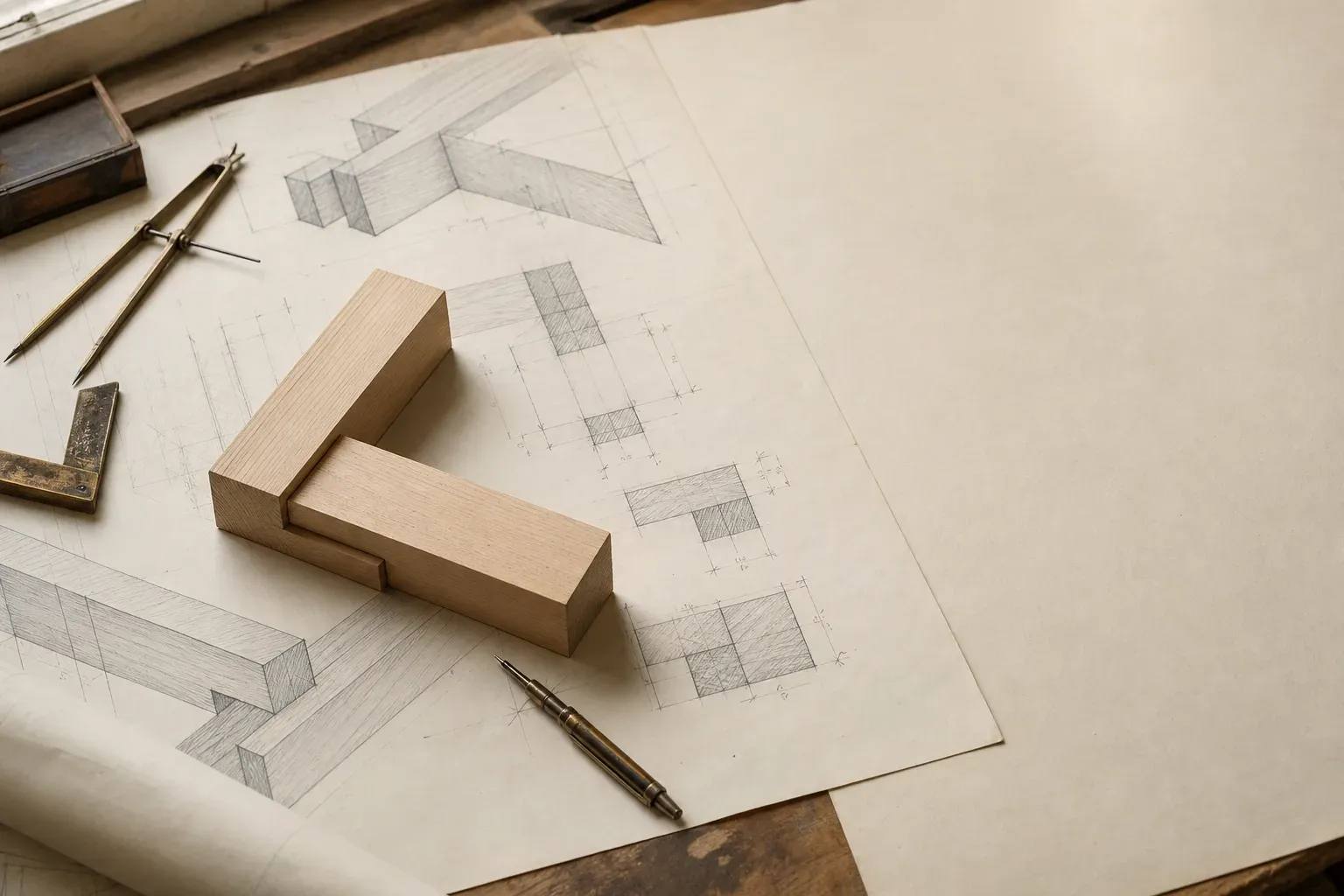
The drawings and written specifications behind Kiso assemblies — sections, joinery, flashing, finishes — documented so others can build from them.
Fabrication files & hardware designs.
Cut files, part geometry, and hardware designs, released in the formats a shop can actually use.
Material research & environmental data.
What testing natural and low-toxicity materials teaches — sources, assemblies, measurements — shared as data, not claims.
Building-performance tools.
Calculators and models for energy, moisture, and comfort, built to check real assemblies before they are built.
Public standards & reference assemblies.
Versioned standards and reference assemblies — the shared vocabulary that lets details, files, and tools agree with each other.
Agent-native CAD.
Every CAD system assumes a human at a screen, with automation as the assistant. This platform inverts that: the AI agent is the operator, working over MCP, and the human's surfaces are intent and review.
Code is the model.
A part is an executable parametric program, not a mouse-gesture history — diffed, reviewed, versioned, tested, and rebuilt deterministically.
Structured introspection.
The agent's senses are machine answers — mass properties, topology, clearances, interference checks — not screenshots. Renders confirm; queries measure.
Humans explore, agents edit.
The one human surface is a read-only WebGL viewer: orbit, section, measure, explode, comment. Approval and release stay human acts.
Manufacturing outputs, first-class.
STEP, STL, 3MF, DXF, drawings, and toolpaths are build outputs of the model program, pinned by content hash and reproducible from source.
Headless build123d/OCCT geometry, sandboxed workers, geometry tests in CI, and an embedded viewer — self-hosted or, later, a paid Kiso cloud.
The same rules as the shop.
The Commons is not a side project with looser standards. What gets published follows the rules the physical work follows.
Durable over disposable.
Published work is meant to be used for years and repaired when it ages — not abandoned when it stops being novel.
Repairable and honest.
Construction you can see into and reason about, in buildings and in code. No black boxes where a plain mechanism would do.
Models are programs.
Versioned, testable, reproducible from source — whether the model is a machined part, an assembly, or a wall section.
The repositories.
Two to start. A pillar earns its own repository when its material outgrows the shared one.
kiso-commons/cad
Agent-native CAD: a CAD-as-code platform built to be driven by AI agents over MCP. Headless build123d/OCCT geometry, structured introspection as the agent's feedback loop, manufacturing outputs, and an embedded WebGL viewer.
kiso-commons/commons
Construction details, specifications, fabrication files, material research, and reference assemblies — the home for every pillar until one earns its own repository.
Early days: repositories open to the public as their documentation and licensing land, and interfaces and structures change without notice. Everything is Apache-2.0 unless a repository states otherwise.
Use it. Question it. Build on it.
The Commons is small and replies are human. Corrections, questions, and contributions are all welcome.